Bukchon at Six in the Evening
As the tourists slip away, evening settles over Bukchon — a quiet that lives at the top of a steep hill
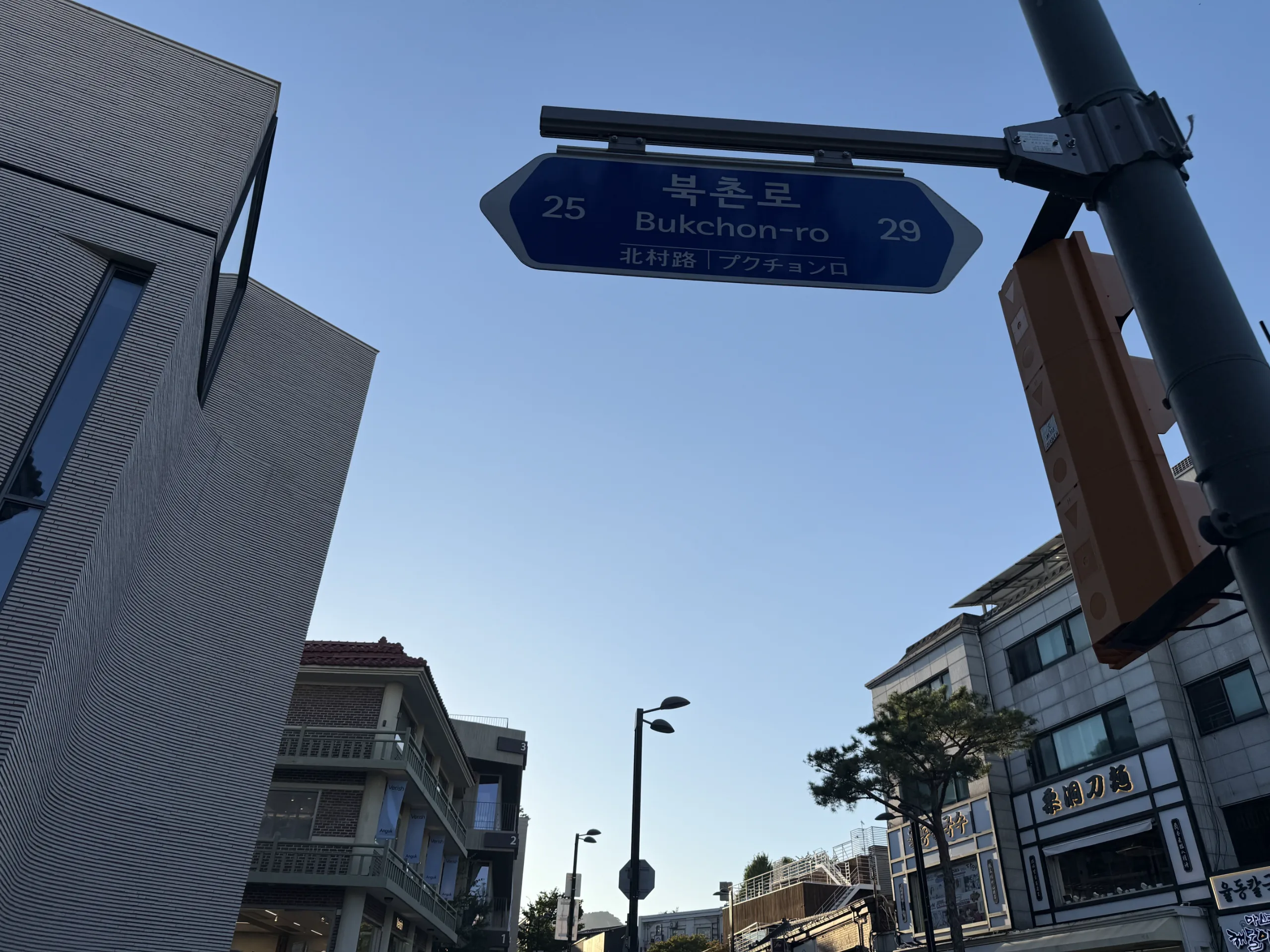
After six o'clock, the streets of Bukchon shift into a different register. The footsteps that crowded the lanes through the day disappear one by one, and the neighbourhood finally reclaims its own pace. Where the bustle once was, a gentle ease moves in to take its place.
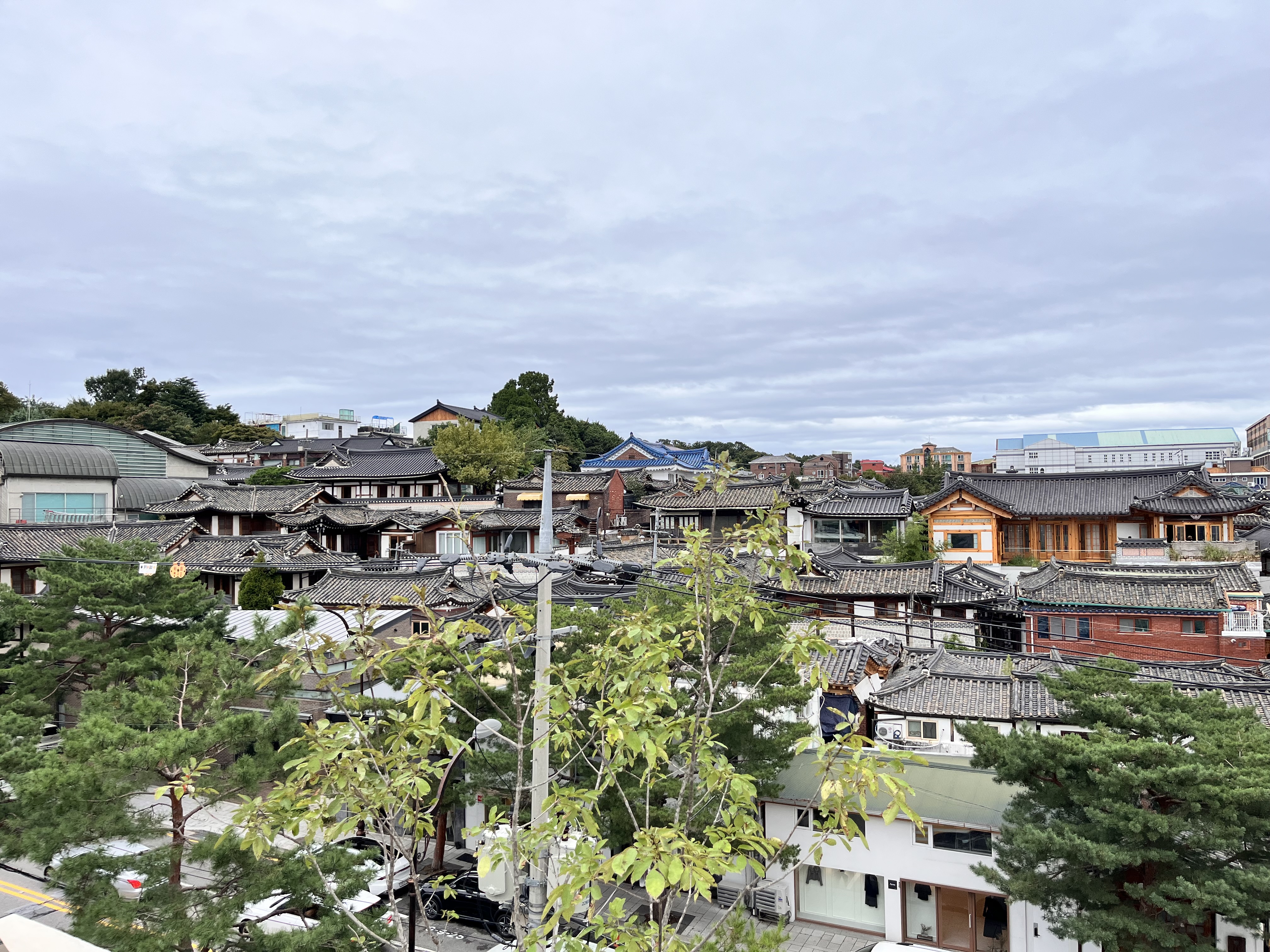
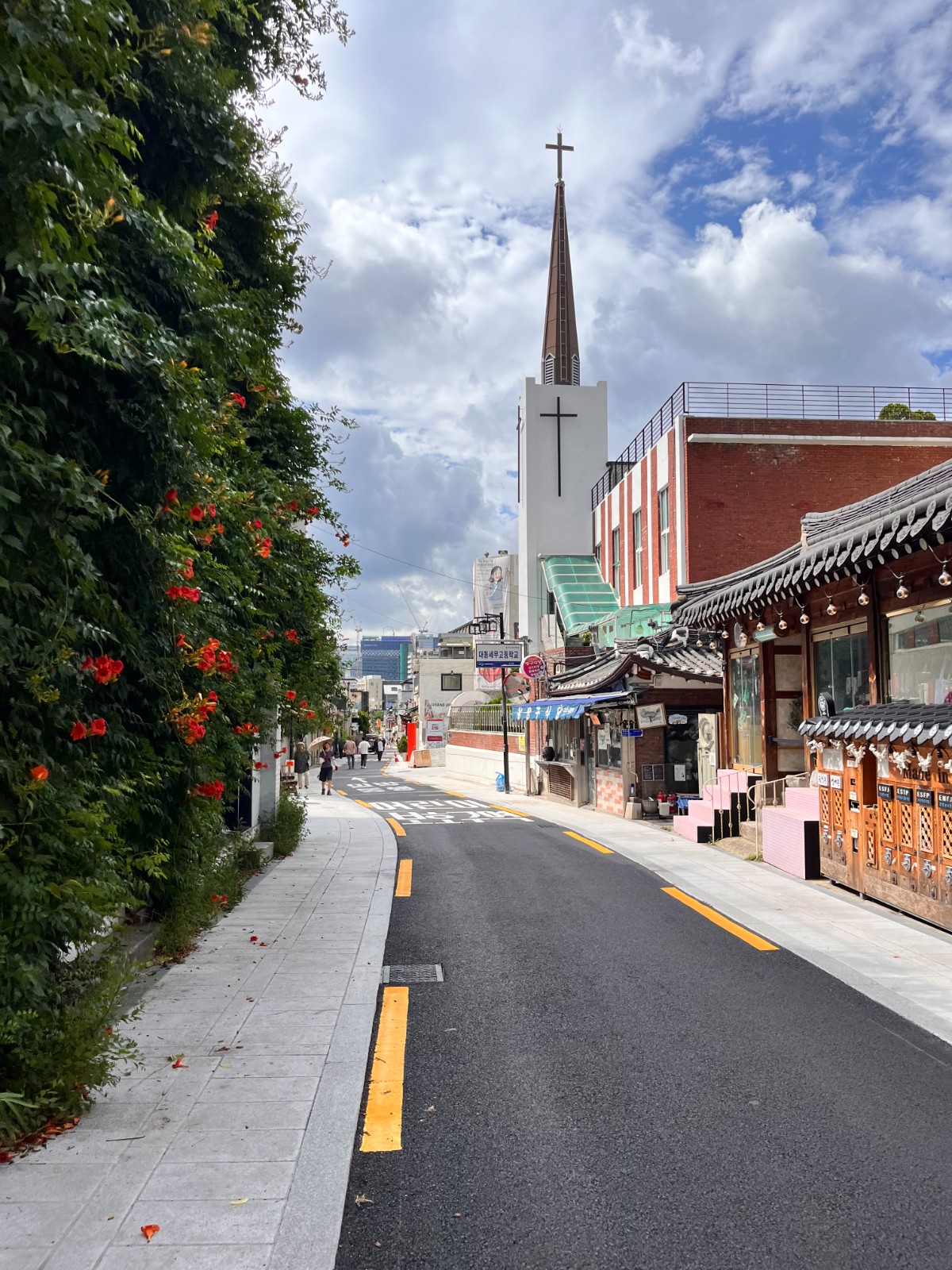
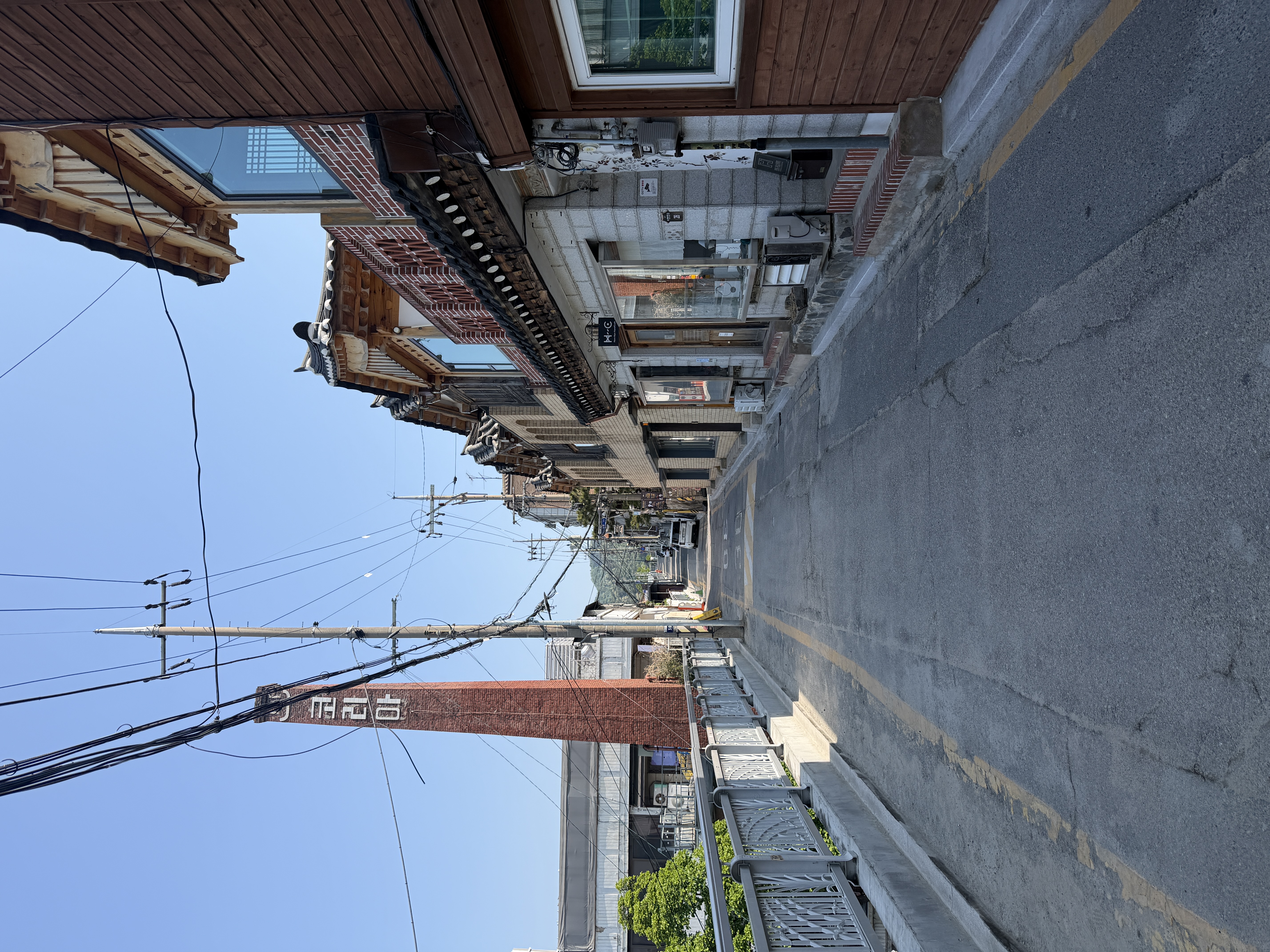
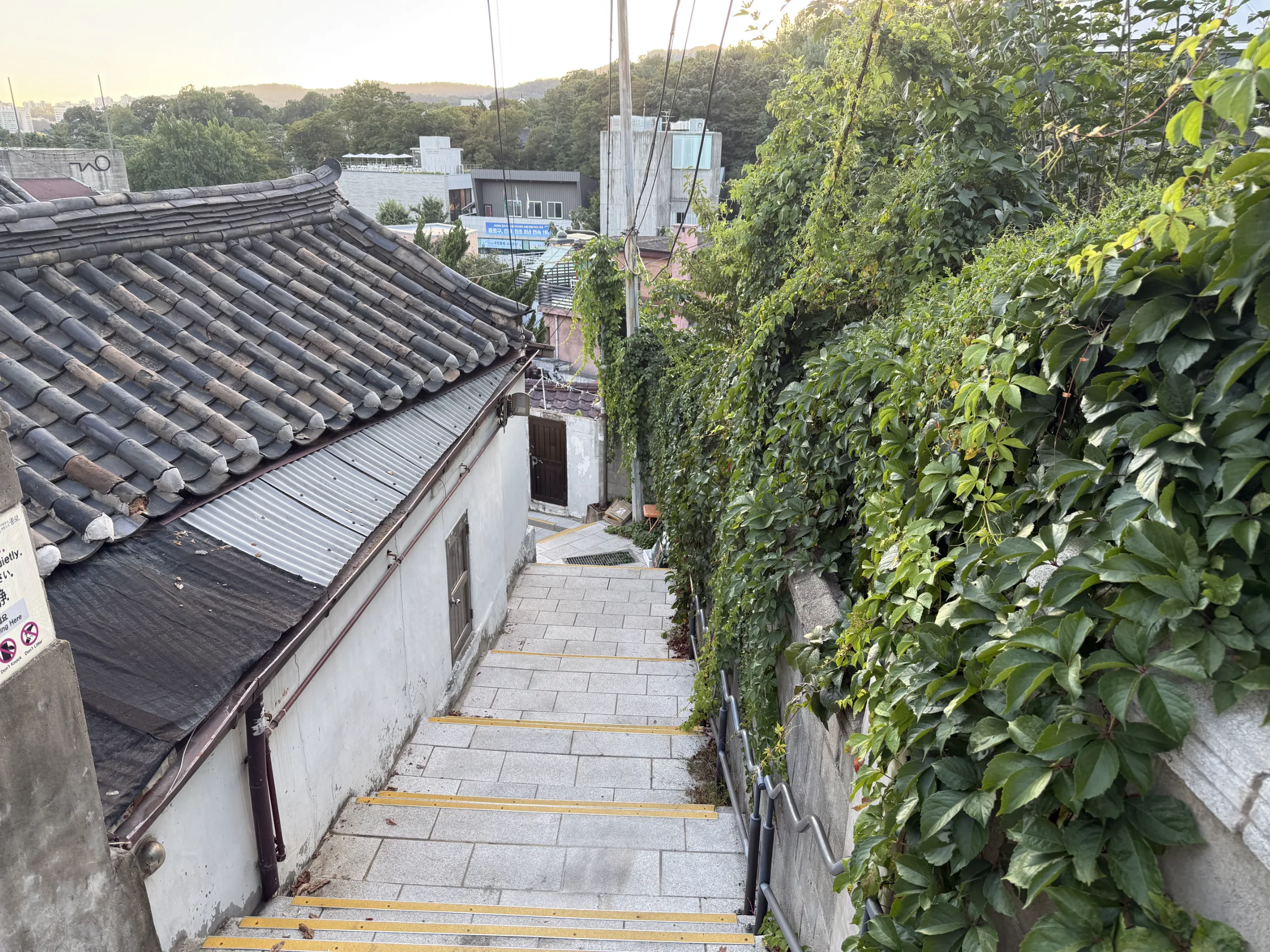
Walking up the hill along Bukchon-gil, there comes a moment when your legs grow heavy and your breath runs short. The incline is anything but gentle. Yet that very steepness slows your stride, and in doing so, it gives you longer to look around. Pine branches reaching beyond tiled rooftops, a cool breeze spilling over stone walls. Between each laboured step, the scenery seeps in, little by little.
Lining the lane, traditional wooden buildings stand shoulder to shoulder, and small shops settle into their evening routines beneath the shade cast by stone walls and overhanging eaves. On the display shelves, now that the midday commotion has passed, fans and woven baskets rest in silence — less as things for sale, more as things that simply belong there.
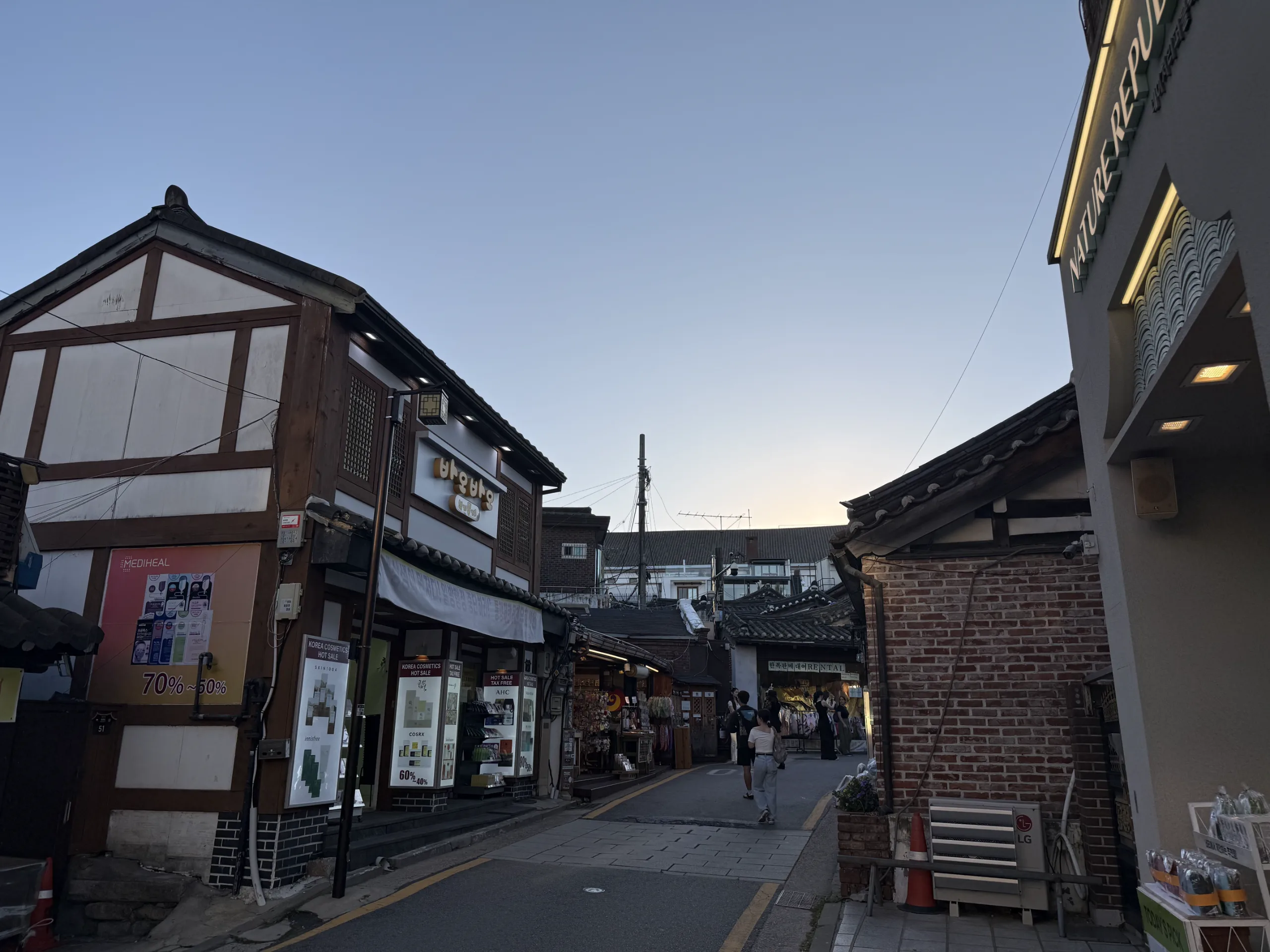
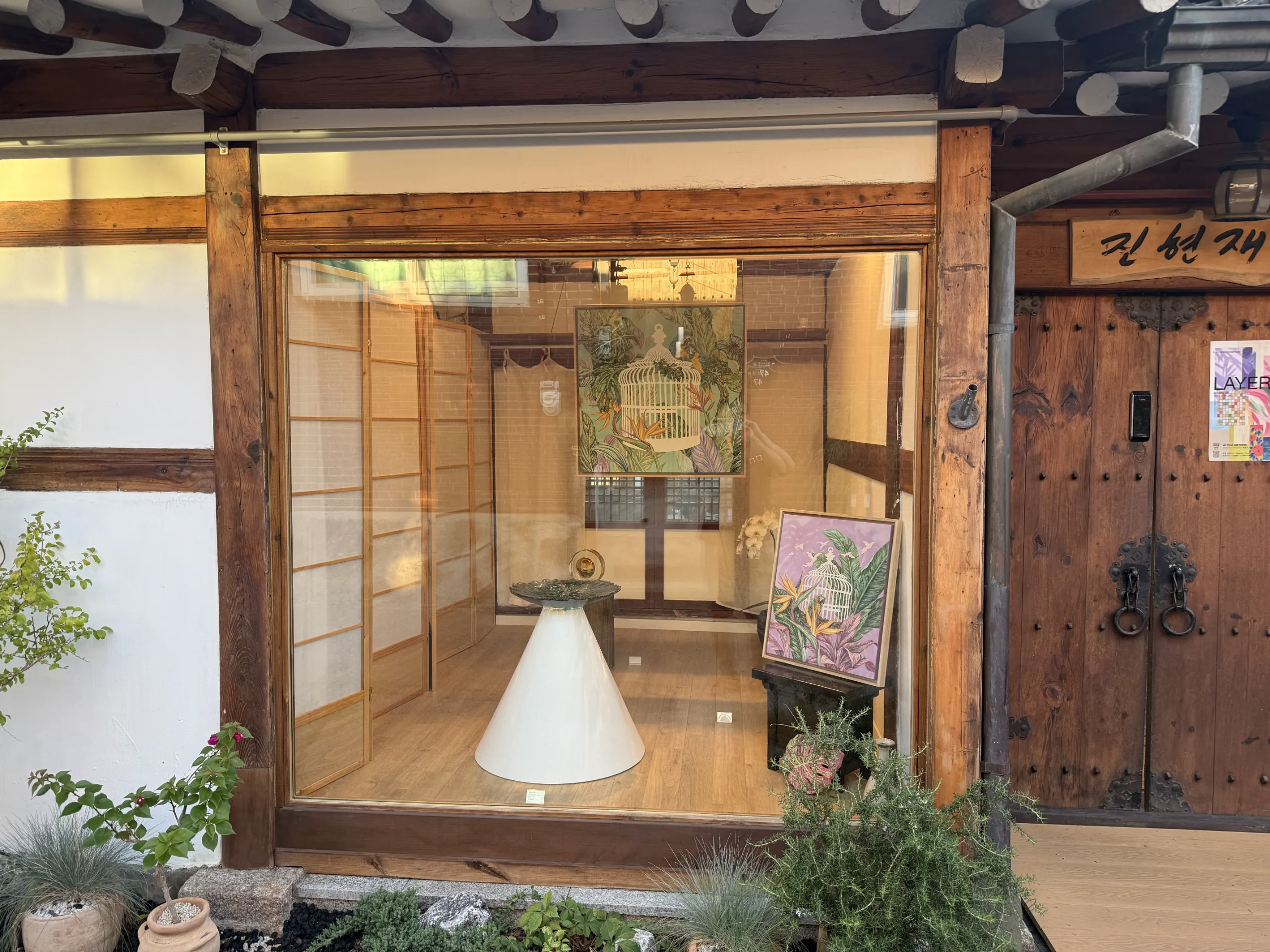
A small shop where a canvas on an easel is visible through the glass, an alleyway with a few potted plants set out by the door. Bukchon's evenings are made of moments like these — unassuming, yet without a single empty space.
The closer you draw to the top of the hill, the cooler the breeze becomes. The more breathless the climb, the lighter the heart. City buildings appear in the distance beyond the rooftops, while an ancient pine stands among them, utterly unmoved. Six o'clock in Bukchon is that kind of hour — not a time for arriving somewhere, but a time when the walking itself becomes the destination.