
Once Every Twenty Years: Relaying the Roof Tiles
The work of making Gahoegyeong last longer: on caring for a Bukchon Hanok
A person needs steady care to stay healthy, and a Hanok is no different. The moment you stop tending to a timber-framed house with a tiled roof, it begins, slowly, to lose ground to time. Among the first things we did in preparing Gahoegyeong (가회경) to open was the roof. Roughly once every twenty years, the tiles need attention and the structural timber has to be checked carefully for any sign of damage. This was that time.

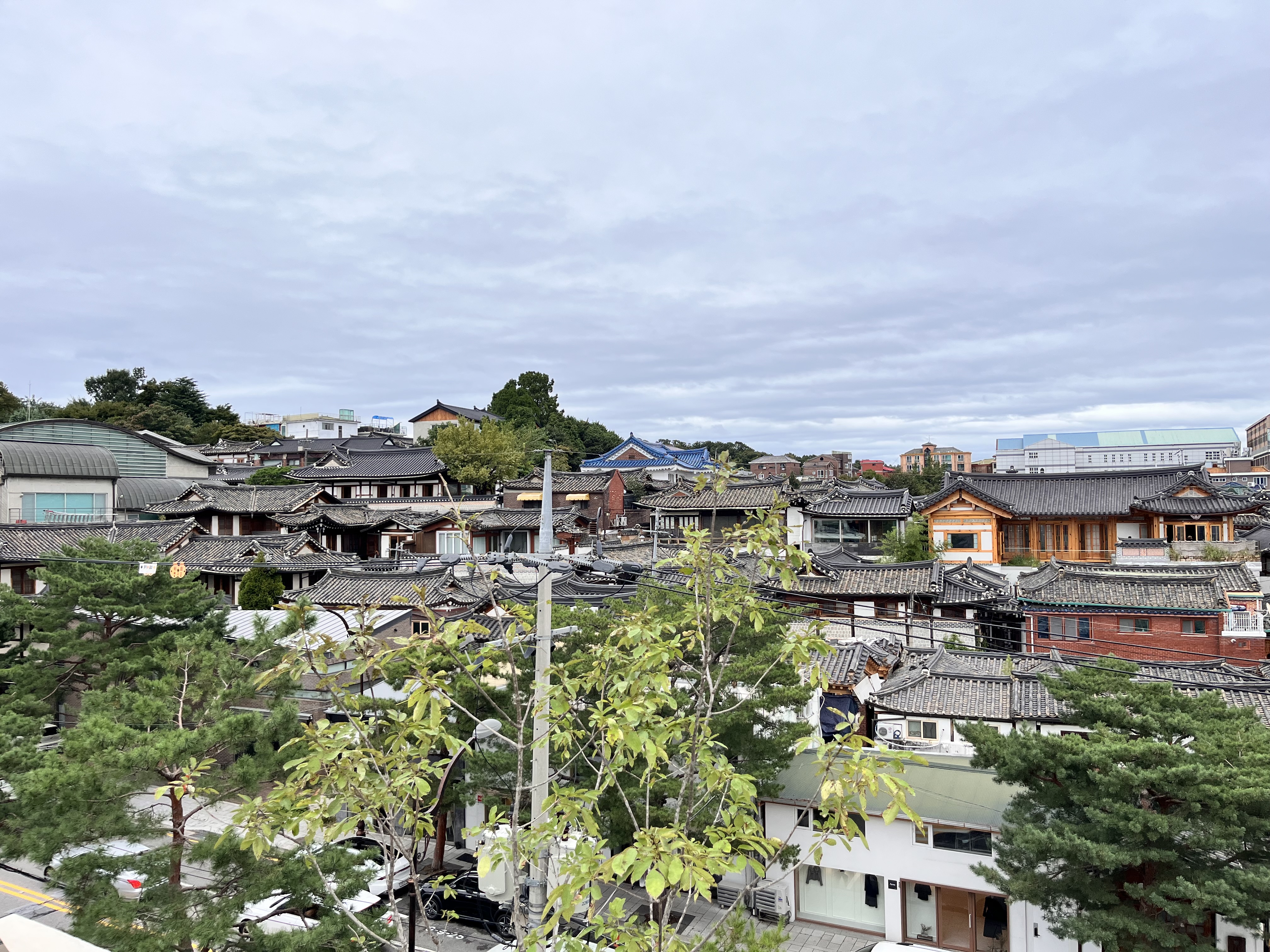
The day the scaffolding rose, the house suddenly looked unfamiliar. What I had always taken in at a glance as simply "the roof" revealed itself layer by layer through the steel pipes: how the rafters were set, at what angle the tiles shed water. A house I had seen every day felt, in that moment, as though I were seeing it for the first time.

Old tiles, what are called guwha, fade with age. The grey deepens as the years settle into them, and from a distance they take on a quiet character all their own, the way a wine grows richer with time. Honestly, my first instinct was to leave them as they were. But the tile specialist told me otherwise. For the house to last, new tiles were the right choice: better waterproofing, better insulation, better structural integrity. Choosing longevity over patina was, in the end, the surest way to keep this house standing.

The day the tiles came off, dust filled the air. Old earth and broken tile fragments piled up in a corner of the courtyard, and looking at that mound I understood, in a concrete way, how long this house had been holding back rain and wind. The timber structure was inspected piece by piece. Fortunately, there was no serious damage. We reinforced the insulation, laid the new tiles, and finished every joint carefully against leaks. When the scaffolding came down, the roof settled back into its eaves.

New tiles are vivid in colour. They have not had time yet, and it shows. They looked a little stark at first, but after a few days and one good rain, I watched them darken as they got wet and dried again, gradually finding their place. A Hanok roof is not something that is ever quite finished; it ripens alongside time.
This work was done for the guests who come to Gahoegyeong, but it was also done for the house itself. To last longer, to hold firmer. To keep rain out and let the wind pass through, and to remain standing here. That, I think, is what maintenance really means: steady attention in places no one sees, and the way that accumulated care allows a house to live a long life.
.jpg)